
Minimally Invasive Robotic & Hysteroscopic Gynecologic Surgery for Fibroids, Polyps, Endometriosis & Fertility Care Across New England
What Is Advanced Robotic & Hysteroscopic Reproductive Surgery?
Advanced Robotic & Hysteroscopic Reproductive Surgery near Boston Massachusetts, New England is a minimally invasive surgical approach used to diagnose, treat, or remove endometriosis, fibroids, polyps, scar tissue, and other reproductive anatomical issues. These procedures—including robotic hysterectomy, robotic myomectomy, robotic endometriosis surgery, hysteroscopic myomectomy, hysteroscopic polypectomy, and diagnostic or operative hysteroscopy—allow surgeons to treat complex gynecologic conditions with exceptional precision.
Patients across Boston, Massachusetts, and the greater New England region choose this approach because it delivers better outcomes, minimal discomfort, and faster recovery. Unlike traditional open surgery, robotic and hysteroscopic approaches use tiny or no incisions at all, allowing patients to return to life more quickly with less pain and improved reproductive function.
What Advanced Robotic & Hysteroscopic Reproductive Surgery Treats
Common Conditions
- Endometriosis (including deep infiltrating endometriosis): Endometriosis occurs when tissue similar to the uterine lining grows outside the uterus, causing pain, inflammation, and fertility problems. Robotic excision allows precise removal of deep disease while preserving healthy structures.
- Uterine fibroids (robotic or hysteroscopic myomectomy): Fibroids are benign muscular growths that can lead to heavy bleeding, pain, and infertility. Robotic or hysteroscopic myomectomy removes these growths while preserving the uterus.
- Uterine polyps (hysteroscopic polypectomy): Polyps are soft, overgrown areas of the uterine lining that can cause abnormal bleeding or reduced fertility. Hysteroscopic polypectomy safely removes them through a no-incision approach.
- Uterine adhesions or septum: Scar tissue or congenital uterine walls can alter the shape of the uterus and affect bleeding or fertility. Hysteroscopic surgery can restore normal cavity shape and improve reproductive outcomes.
- Uterine prolapse (robotic sacrocolpopexy): Prolapse occurs when pelvic support weakens, causing the uterus or vaginal walls to drop. Robotic sacrocolpopexy lifts and supports the pelvic organs using minimally invasive techniques.
- Ovarian cysts/endometriomas: These cysts, especially those related to endometriosis, can cause pain and interfere with fertility. Robotic surgery allows precise removal while preserving healthy ovarian tissue.
- Abnormal or heavy menstrual bleeding: Excessive or irregular bleeding can result from fibroids, polyps, or hormonal imbalance. Minimally invasive surgery addresses underlying causes to restore normal cycles.
- Pelvic pain unresponsive to medication: Chronic pelvic pain may be linked to endometriosis, adhesions, or structural abnormalities. Minimally invasive surgery identifies and treats the source when medications are ineffective.
- Infertility related to uterine or pelvic abnormalities: Surgical correction of fibroids, polyps, adhesions, or endometriosis can significantly improve conception rates. Restoring normal pelvic anatomy enhances reproductive health.
- Cavity abnormalities assessed via diagnostic hysteroscopy: Diagnostic hysteroscopy allows direct visualization of the uterus to identify issues like polyps, septum, or scar tissue. It guides treatment planning and can often correct problems during the same procedure.
Symptoms Patients May Experience
- Chronic pelvic pain: Long-term pelvic pain may be caused by endometriosis, adhesions, or fibroids. Surgery helps identify and remove the source of persistent discomfort.
- Heavy or irregular menstrual bleeding: Excessive or unpredictable bleeding often indicates structural issues like polyps or fibroids. Minimally invasive treatment helps restore a normal menstrual pattern.
- Pain during intercourse: Painful intercourse may result from endometriosis, pelvic adhesions, or pelvic floor disorders. Surgical correction often reduces pain and improves comfort.
- Bladder or bowel symptoms: Deep endometriosis or pelvic masses can irritate the bladder or bowel, causing pain or pressure. Robotic surgery offers precise removal of disease around these delicate organs.
- Bloating or pelvic pressure: Fibroids, cysts, or endometriomas can create a feeling of fullness or heaviness in the pelvis. Removing the underlying cause relieves pressure and improves daily comfort.
- Infertility or recurrent pregnancy loss: Structural abnormalities inside the uterus or pelvis can interfere with implantation or early pregnancy. Corrective surgery enhances the chances of successful conception and pregnancy.
Why This Approach Is Recommended
This advanced surgical method is preferred for patients throughout near Boston Massachusetts, New England, due to its accuracy, reduced downtime, and improved reproductive outcomes.
How Advanced Robotic & Hysteroscopic Reproductive Surgery Works (Step-by-Step Overview)
Robotic Gynecologic Surgery
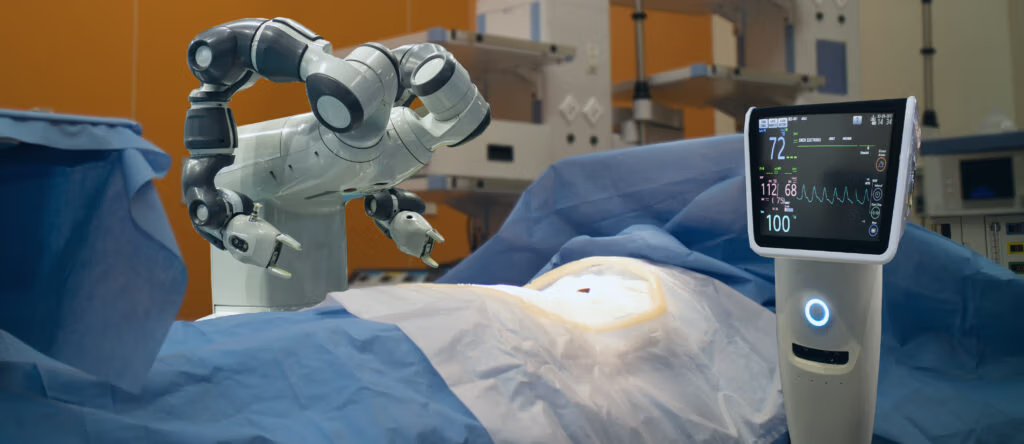
Procedures such as robotic myomectomy, robotic hysterectomy, robotic endometriosis surgery, and robotic sacrocolpopexy are performed using a state-of-the-art robotic platform.
Steps include:
- Small abdominal incisions are placed.
- A high-definition camera and robotic instruments are inserted.
- The surgeon controls precise robotic movements from a console.
- Diseased tissue is removed or repaired with minimal bleeding.
Hysteroscopic Procedures
Procedures like hysteroscopic myomectomy, hysteroscopic polypectomy, and office hysteroscopy require no abdominal incisions.
Steps include:
- A hysteroscope is placed through the cervix.
- Sterile fluid expands the uterus.
- Fibroids, polyps, or adhesions are removed safely and efficiently.
These methods are highly sought after by patients seeking advanced, minimally invasive gynecologic care near Boston Massachusetts, New England.
Benefits of Advanced Robotic & Hysteroscopic Reproductive Surgery
- Minimally invasive with tiny or no incisions: These procedures use small abdominal incisions or none at all, resulting in less trauma to the body. Patients benefit from quicker healing and reduced scarring.
- High-precision surgical technique: Robotic and hysteroscopic systems provide enhanced visualization and control, allowing surgeons to treat delicate reproductive structures with exceptional accuracy.
- Reduced postoperative pain: Because tissues are handled gently and incisions are minimal, most patients experience significantly less pain after surgery compared to traditional open methods.
- Faster recovery compared to traditional surgery: Minimally invasive techniques allow patients to resume normal activities much sooner, often returning to light work within days to weeks.
- Less blood loss: Smaller instruments and precise dissection techniques help minimize bleeding during surgery, improving safety and reducing the likelihood of transfusion.
- Lower complication rates: Robotic and hysteroscopic approaches reduce the risk of infection, wound issues, and other common surgical complications.
- Reduced recurrence of disease: Precise removal of endometriosis, fibroids, or polyps lowers the chance of symptoms returning, offering better long-term outcomes.
- Better fertility outcomes: By restoring normal reproductive anatomy and removing disease, these procedures increase natural fertility and improve success rates with assisted reproduction.
- Ideal for complex pelvic or reproductive conditions: These techniques are especially effective for deep endometriosis, large fibroids, adhesions, and other challenging anatomical issues requiring expert precision.
5. Who Is a Good Candidate?
You may be a candidate if you experience:
- Endometriosis (Stage II–IV or deep infiltrating): Patients with moderate to severe endometriosis often benefit from robotic excision, which allows thorough removal of deep lesions..
- Painful ovarian cysts (endometriomas): Endometriomas can cause significant pain and affect ovarian function, and robotic surgery allows careful removal while preserving healthy tissue.
- Fibroids affecting bleeding, pain, or fertility: Women with fibroids that disrupt menstruation or pregnancy may achieve symptom relief and improved fertility through minimally invasive myomectomy.
- Chronic pelvic pain unresponsive to medication: When pain persists despite medical therapy, surgical evaluation and treatment can identify and correct underlying conditions.
- Uterine polyps or cavity issues: Hysteroscopic removal of polyps or abnormal tissue restores the normal uterine environment for improved bleeding patterns and fertility.
- Pelvic organ prolapse requiring surgical repair: Robotic sacrocolpopexy provides durable pelvic support with less downtime than traditional prolapse surgery.
- Infertility related to endometriosis or uterine abnormalities: Correcting endometriosis, fibroids, or cavity abnormalities often enhances the likelihood of successful conception.
- A desire to preserve fertility: These minimally invasive, tissue-sparing procedures are ideal for patients who wish to maintain or improve their reproductive potential.
Many patients seeking specialized care near Boston Massachusetts, New England benefit greatly from this advanced robotic and hysteroscopic approach.
6. Risks & Considerations
While these procedures are generally safe, risks may include:
- Minor bleeding or infection: Patients with moderate to severe endometriosis often benefit from robotic excision, which allows thorough removal of deep lesions
- Scar tissue formation: Some patients may develop adhesions after surgery, although this risk is lower with minimally invasive approaches
- Anesthesia complications: General anesthesia carries rare but possible side effects, which are carefully assessed and monitored during the procedure.
- Rare risk of organ injury: Although uncommon, delicate pelvic structures like the bowel or bladder may be at risk during complex surgery, especially in cases of severe disease.
- Cramping or spotting after hysteroscopy: Mild uterine cramping or light bleeding is typical after hysteroscopic procedures and usually resolves quickly.
- Potential need to convert to a different surgical approach in rare cases: In situations where disease is extensive or anatomy is difficult to visualize, the surgeon may need to switch to another technique to ensure safety.
Your surgeon will discuss personal risks based on your health and goals.
7. Recovery & What to Expect
Recovery Timeline
- Hysteroscopy: Most return to work in 1–2 days.
- Robotic surgery: Light activities often resume within 1–2 weeks.
Pain Management
- OTC pain relievers for most patients
- Prescription options for more complex cases
Follow-Up
- Typically 1–3 weeks after surgery
Healing & Symptom Improvement
- Pelvic pain improvement often begins within days to weeks
- Fertility benefits occur once healing is complete
Patients traveling from throughout Boston, Massachusetts, and New England appreciate the predictably quick recovery.
Frequently Asked Questions (FAQs)
1. Is robotic surgery better for endometriosis?
Yes. Robotic endometriosis surgery offers superior visualization and precise excision of deep disease.
2. How long does hysteroscopy take?
Diagnostic hysteroscopy usually takes 5–15 minutes, while operative hysteroscopy takes 20–45 minutes.
3. Is hysteroscopy painful?
Most patients experience mild cramping, similar to menstrual discomfort. Office procedures are generally well tolerated.
4. Is robotic surgery covered by insurance?
Yes, most medically necessary robotic gynecologic surgeries are covered by insurance.
5. Will this improve fertility?
Yes. Removing fibroids, polyps, scar tissue, and endometriosis often boosts natural conception and IVF success.
6. Does this treat deep endometriosis?
Yes. Robotic systems offer enhanced visualization ideal for deep infiltrating endometriosis.
7. Where can I find a robotic myomectomy near me?
Our center provides expert robotic myomectomy for patients living near Boston Massachusetts, New England, and across the region.